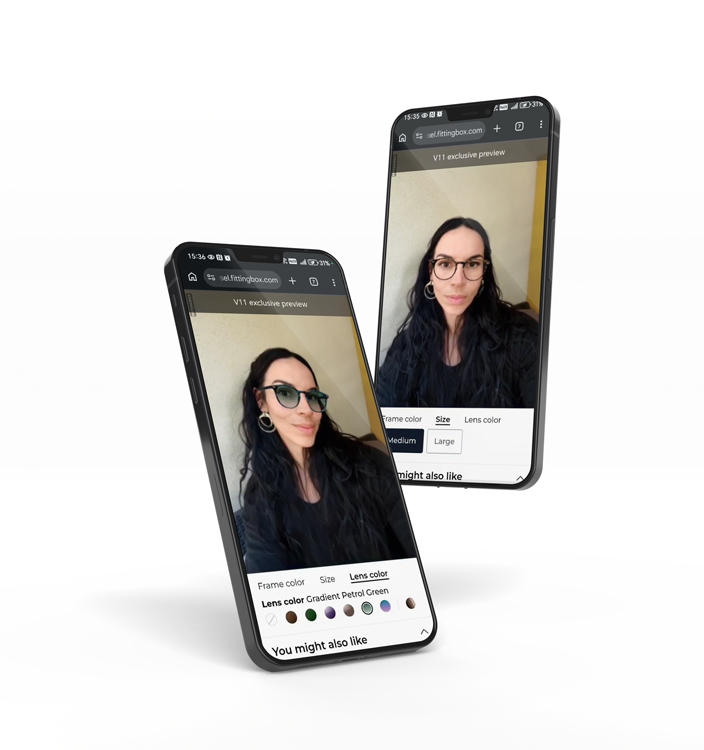
As glasses ecommerce enters 2025, customer expectations have reached new heights. Shoppers now demand intuitive, fast, and personalized online experiences, especially when purchasing something as personal and precise as eyewear. For optical retailers, this means that simply listing frames online is no longer enough.
To stay competitive and convert visitors into buyers, your ecommerce platform must go beyond the basics. In this article, you'll discover the 7 essential features that every successful glasses ecommerce site must offer in 2025, along with actionable tips and innovative tools that can help you implement them.
1. Virtual Try-On: A Non-Negotiable Experience
When it comes to shopping for eyewear online, the ability to try on frames virtually has become a baseline expectation. According to a 2024 Deloitte report, over 72% of online eyewear shoppers say they are more likely to purchase if they can virtually try on. It eliminates uncertainty, boosts confidence, and enhances user engagement, all while reducing returns.
.webp?width=700&height=467&name=20250618_0946_E-commerce%20de%20Gafas_simple_compose_01jy0zz4kae4za8ptpem0xbj8v%20(1).webp)
A well-integrated VTO solution allows users to see how frames look on their face in real-time, directly from their desktop or smartphone. This is particularly valuable in a category where fit and style are deeply personal. For ecommerce businesses, it also increases time-on-site and improves conversion rates.
Fittingbox’s virtual try-on for website is an industry-leading solution trusted by major optical retailers. It offers:
- Instant glasses virtual try-on using live camera or photos
- Real-time fitting with frame alignment and scaling
- Seamless integration with ecommerce platforms like Shopify, WooCommerce, and Magento
Implementing VTO isn’t just about staying modern, it’s about meeting shoppers where they are and giving them confidence to click “Add to Cart.”
2. Mobile-First and Lightning-Fast UX
In 2025, more than 65% of eyewear ecommerce traffic comes from mobile devices, according to Statista. If your website isn’t designed with mobile users in mind, you’re leaving conversions, and revenue on the table. Consumers expect a smooth, intuitive experience no matter the screen size.
A mobile-first glasses ecommerce site should load in under 3 seconds, offer clear navigation, and ensure product pages are fully responsive. Key features like zoomable frame images, virtual try-on, and personalized recommendations must perform flawlessly on smaller screens.
Here are a few mobile UX essentials for eyewear ecommerce:
- Touch-friendly VTO interface (compatible with front-facing cameras)
- Sticky navigation and clear CTAs
- Accelerated checkout options (Apple Pay, Google Pay, etc.)
- Mobile-optimized filtering for shape, color, and size
Fittingbox’s digital eyewear solutions are fully responsive and mobile-ready, ensuring that customers can try on frames with ease from their smartphones. A frictionless mobile experience isn’t optional, it’s a direct path to higher engagement and conversion.
3. Smart Product Recommendations & AI Search
Personalization is no longer a luxury, it’s a necessity. In 2025, glasses ecommerce platforms that leverage AI to tailor the shopping journey are seeing up to 30% higher conversion rates, according to a recent McKinsey report. From intelligent search bars to smart recommendations, AI helps customers find the perfect pair faster.
AI-powered features allow your site to:
- Suggest frames based on facial features, purchase history, or browsing behavior
- Enable visual search by uploading a photo
- Display “Customers also bought” or “Best match for your face” carousels
Fittingbox enhances personalization through solutions like:
- Face Shape API: Instantly detects the customer’s face shape and recommends ideal frame styles.
- PD Measurement Tool: Ensures better fitting by automatically capturing pupillary distance, crucial for progressive lenses.
By combining real-time biometric data with intelligent algorithms, your site becomes more than just a catalog, it becomes a personalized shopping assistant.
%20(1).webp?width=700&height=394&name=facial-recognition-collage-concept%20(1)%20(1).webp)
4. High-Fidelity 3D Viewer for Frames
Static images are no longer enough to showcase eyewear online. Today’s shoppers want an immersive, tactile feel of the product, even from behind a screen. A 3D viewer provides just that, offering a detailed and interactive experience where users can rotate, zoom, and inspect every angle of a frame.
Recent data from Shopify indicates that product pages with 3D or AR content convert 94% better than those without. For eyewear, where texture, thickness, and curve matter, this feature is a game changer.
Key benefits of a 3D viewer in glasses ecommerce include:
- Enhanced product transparency (literally and figuratively)
- Reduced returns due to misaligned expectations
- Greater customer engagement and satisfaction
Fittingbox’s 3D Viewer enables:
- 360° rotation and zoom with ultra-high resolution
- Realistic materials and lighting effects
- Easy integration with major ecommerce platforms
Pairing a 3D viewer with virtual try-on bridges the gap between in-store and online shopping—helping customers feel confident about their purchase.
5. Lens Customization Simulator
When buying glasses online, one of the most confusing steps for customers is choosing the right lenses. What will photochromic lenses look like? How dark will polarized lenses appear? Without clear visualization, hesitation rises, and so do cart abandonment rates.
That’s where a lens simulator makes a difference. By allowing users to preview lens effects in real-time, you turn a complex decision into an informed, engaging step in the buying journey.
According to a 2024 report by Vision Council, 47% of online eyewear shoppers feel unsure about lens options. A lens customization simulator eliminates that barrier by:
- Demonstrating lens color transitions and coatings (e.g. blue light, anti-reflective)
- Showing how prescription lenses affect vision clarity
- Comparing visual effects side-by-side
Fittingbox’s Lens Simulator offers:
- Real-time simulations embedded directly into product pages
- A user-friendly interface tailored for both desktops and mobile devices
- Integration with prescription selection and checkout flow
By making lens choices clear and interactive, you build trust and improve your average order value.
6. Integrated Pupillary Distance & Face Scan Tools
Precision matters in eyewear. Even a small mismatch in measurements like pupillary distance (PD) or face size can lead to discomfort or unusable glasses. In 2025, ecommerce platforms must offer automated, integrated measurement tools to guide customers accurately through the buying process.
Manual PD entry is outdated and error-prone. Today’s shoppers expect effortless tools that measure directly via their webcam or smartphone. Not only does this enhance the customer experience, but it also reduces costly returns due to improper fit.
Fittingbox offers two standout solutions to meet this need:
- PD Measurement: Instantly calculates pupillary distance with a simple selfie.
- Face Shape API: Analyzes facial features to recommend frames that match proportions, style, and function.
Together, these tools:
- Shorten the purchase journey by eliminating guesswork
- Ensure better-fitting frames and correct lens centering
- Provide a personalized experience based on biometric data
By integrating these tools directly into your ecommerce flow, you add both convenience and precision, key to turning browsers into loyal buyers.
7. Real-Time Inventory & Omnichannel Integration
Nothing frustrates online shoppers more than discovering their chosen frame is out of stock at checkout. In fact, a 2024 Retail Insights study found that 38% of cart abandonments in the eyewear sector are due to inventory issues. That’s why real-time stock visibility and seamless omnichannel integration are essential features in 2025.
Customers expect to:
- See accurate stock availability by color and size
- Choose fulfillment options (delivery, in-store pickup, home try-on)
- Transition smoothly between online browsing and physical store experiences
Integrating your ecommerce platform with your inventory management system and in-store systems offers multiple benefits:
- Prevents overselling and out-of-stock disappointments
- Enables services like “Try in Store” or “Click & Collect”
- Supports marketing strategies like localized promotions and retargeting
Fittingbox’s virtual try-on for optical store complements this strategy perfectly. It allows customers to try on frames virtually in physical locations, even if the item isn’t in stock, helping retailers expand assortments without expanding inventory.
In 2025, a connected customer journey is critical. Real-time and omnichannel systems ensure you’re ready.
Conclusion
The eyewear ecommerce landscape in 2025 is defined by experience, personalization, and precision. From virtual try-on to AI-driven recommendations, the features outlined in this article are no longer “nice-to-haves”, they’re essential for meeting customer expectations and staying competitive.
By integrating advanced tools like online try-on, 3D visualization or pupillary distance measurement, you not only enhance the shopping journey but also improve conversion rates and reduce returns.
The future of glasses ecommerce is already here. Are you ready to deliver it?
FAQ
What are the most important features for a glasses ecommerce site in 2025?
The most important features for a glasses ecommerce site in 2025 include virtual try-on, mobile-first UX, AI-powered recommendations, a 3D frame viewer, lens customization, online pupillary distance measurement, and real-time inventory integration. These features help shoppers choose frames with more confidence and support stronger conversion.
Why is virtual try-on important for eyewear ecommerce?
Virtual try-on is important because eyewear is a personal and visual purchase. Shoppers need to understand how frames look on their face before buying. A virtual try-on experience reduces uncertainty, increases purchase confidence, and can help reduce avoidable returns caused by style or fit mismatch.
How can a 3D viewer improve an online eyewear store?
A 3D viewer improves an online eyewear store by letting shoppers rotate, zoom, and inspect frames from every angle. This helps them better understand frame shape, materials, thickness, color, and details before purchase, creating a richer product experience than static images alone.
Do online PD measurement tools help sell prescription glasses online?
Yes, online PD measurement tools can help sell prescription glasses online by making the purchase journey easier and more precise. They allow shoppers to measure their pupillary distance from home, reducing friction during prescription entry and helping customers feel more confident about ordering glasses online.
How can eyewear retailers reduce cart abandonment online?
Eyewear retailers can reduce cart abandonment by improving mobile speed, making product pages clearer, offering virtual try-on, simplifying lens selection, showing real-time inventory, and providing fast checkout options. The goal is to remove uncertainty and friction before the shopper reaches the final purchase step.