
03 August 2026 • 4 min read
In eyewear retail, the difference between a lost sale and a loyal customer often lies in how smooth the experience feels. Whether shopping online or in-store, buyers expect seamless navigation, instant product understanding, and personalized guidance. Yet, many optical businesses still struggle with UX friction, moments of confusion, hesitation, or frustration that slow down or block the buying journey.
The good news? These obstacles are often fixable. By embracing the principles of frictionless UX design and integrating smart digital tools, eyewear brands and retailers can remove barriers and guide customers through a fluid, enjoyable experience.
Understanding Friction in Eyewear Shopping
Friction in user experience refers to any point in the shopping journey where effort outweighs ease. In the eyewear industry, this can occur at multiple stages, from discovering the right frame to making a final purchase decision. Unlike other retail sectors, buying glasses involves medical, aesthetic, and technical criteria, making the experience complex by nature.
Common Sources of UX Friction
- Lack of try-on confidence: Customers often hesitate without a clear idea of how frames will look on their face.
- Unclear sizing or measurements: Inconsistent details about frame width or lens fit can confuse buyers.
- Limited product information: Insufficient data on materials, colors, or lens compatibility adds uncertainty.
- Slow load times or complex navigation: Clunky interfaces disrupt smooth exploration.
Consequences for Optical Retailers
These friction points have tangible business impacts. A 2024 study by Adobe showed that 68% of consumers abandon their cart if the shopping experience feels difficult or unclear. In the eyewear market, this is amplified by the fact that buyers often need reassurance and guidance, particularly when dealing with medical measurements like pupillary distance. Without intuitive, confidence-boosting experiences, potential customers turn elsewhere.
Key Principles of Frictionless UX Design for Eyewear
A frictionless user experience is not just about removing obstacles, it's about anticipating needs and providing effortless pathways to action. For eyewear, this means aligning the customer journey with intuitive design, clarity, and personalization. Each interaction should feel smooth, reassuring, and relevant.
Focus on Simplicity and Speed
Visual clutter, too many steps, or slow-loading interfaces instantly break immersion. Instead, a streamlined path to product discovery, through smart filtering, clean layouts, and predictive search, helps guide users naturally. According to a 2025 Baymard Institute report, 44% of users abandon a website if it’s hard to navigate or takes too long to load.
Support Informed Decision-Making
- Detailed product visuals: Multiple angles, zoom capabilities, and close-ups of materials.
- Clear specifications: Frame width, bridge size, lens height, and compatibility with lens types.
- Consistent layout: Predictable structure that reduces cognitive load.
Inclusivity and Accessibility
Designing for all users, including those with visual impairments or using assistive technologies, boosts both usability and trust. Fonts, contrast ratios, and keyboard navigation all contribute to a smoother experience for a broader audience.

Leveraging Digital Tools to Create Seamless Journeys
Digital tools play a crucial role in reducing uncertainty, boosting confidence, and simplifying the decision-making process for eyewear buyers. From virtual try-on to 3D product visualization, these technologies bridge the gap between in-person and online experiences, especially in a category where fit and look are everything.
Try It On Virtually
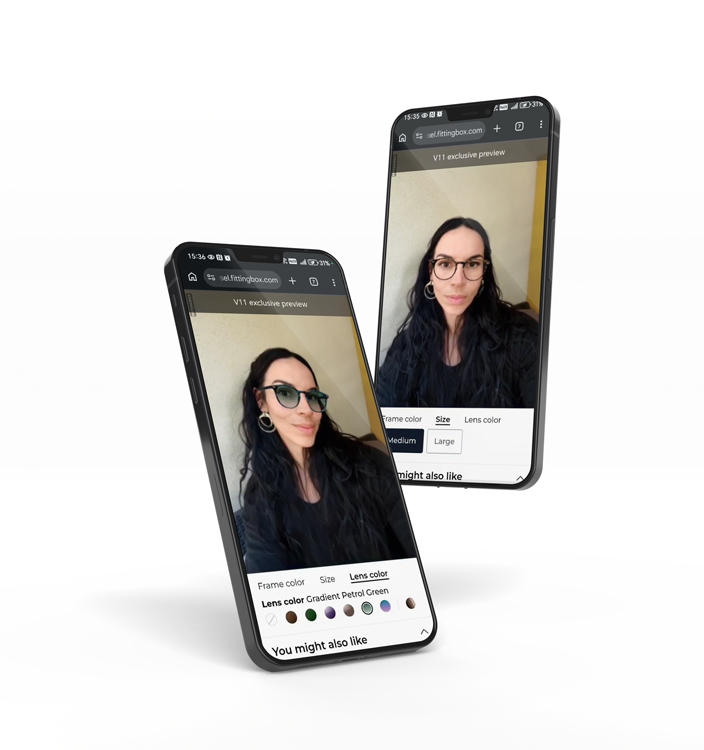
One of the most effective ways to reduce friction is through a virtual try-on experience for glasses. This feature allows users to see frames on their own face in real time, directly from a device. It addresses the “will this look good on me?” hesitation that frequently stalls purchases. EyeBuyDirect reported a 30% increase in conversion rates after implementing try-on functionality.
Pupillary Distance Measurement Tools
Without accurate PD, prescription lenses can feel uncomfortable or cause vision problems. Yet, many users don’t know how to measure it or why it matters. A digital pupillary distance measurement tool makes it easy to get reliable results using a webcam or smartphone, helping users move forward without second-guessing their order.
3D Viewer and Product Visualization
Static images limit understanding of shape, depth, and texture. With a 3D viewer, users can explore frames from every angle, rotate them, and zoom in on key design features. This creates a stronger emotional connection and more informed choices, particularly for high-end or unique frames.
From Online to In-Store: Building Continuity
Customers no longer think in terms of “channels.” They expect a unified experience, starting on a website or app, and continuing seamlessly in-store. For optical businesses, this means aligning tools, data, and UX principles across every touchpoint.

Omnichannel Integration as a UX Strategy
When shoppers try on frames virtually at home, they should be able to retrieve those same preferences when they enter a physical location. This requires a frictionless system where saved frames, facial scans, or PD measures are accessible from any device, whether it's a phone or an in-store tablet.
In-Store Digital Extensions
- Augmented reality mirrors: Recreate the virtual try-on experience inside the boutique.
- Interactive kiosks: Let customers browse additional styles not physically displayed.
- Sales assistance tools: Equip staff with access to customer history for more personalized service.
Case Example: Connecting Experiences
A 2025 case study from an international eyewear brand revealed that integrating virtual try-on with in-store mirrors led to a 22% increase in average order value. Customers were more decisive and willing to explore upgrades once they had a consistent, guided experience across both environments.
Measuring Success and Optimizing Over Time
Designing a frictionless experience is not a one-time effort, it’s a continuous process of refinement based on real behavior and feedback. Optical retailers must define success metrics, monitor performance, and iterate to stay ahead of evolving customer expectations.
Key UX Performance Metrics
- Conversion rate: Measures how effectively the design turns visitors into buyers.
- Session duration: Indicates engagement and ease of navigation.
- Cart abandonment rate: Highlights points of confusion or hesitation.
- Net Promoter Score (NPS): Reflects customer satisfaction and loyalty.
Learning from Analytics and Feedback
Quantitative tools like heatmaps and funnel tracking help identify friction points in the buying process. At the same time, qualitative input, like customer surveys and support tickets, can reveal usability issues that numbers alone don’t show. Brands that combine both sources develop a more complete UX strategy.
Continuous A/B Testing
Testing variations of product pages, navigation flows, or virtual tools allows you to validate design choices with real users. Even small changes, such as modifying the layout of a virtual try-on interface, can yield measurable gains in conversion and satisfaction.
Conclusion
In the competitive world of optical retail, creating a frictionless UX design is no longer optional, it's essential. From virtual try-on to pupillary distance measurement tools and omnichannel consistency, every element must work together to remove obstacles and enhance satisfaction.
When your eyewear experience feels effortless, customers not only buy, they come back. And that’s the true power of thoughtful, fluid UX.


LET'S TALK
Request a demo, a quote or set up an appointment with one of our sales representatives.
CONTACT US
Useful Links
Corporate
Follow Us
© FITTINGBOX 2026 • Terms of use • Privacy & Legal