They can speed up production by standardizing image requirements, using clear approval workflows, and relying on digital frame assets when physical photoshoots create delays.

Eyewear images can slow down an entire e-commerce operation when every new frame, color, and collection needs a full photo workflow.
For online eyewear retailers, faster product visuals are not only an operational gain. They directly support product confidence, smoother browsing, and stronger purchase decisions.
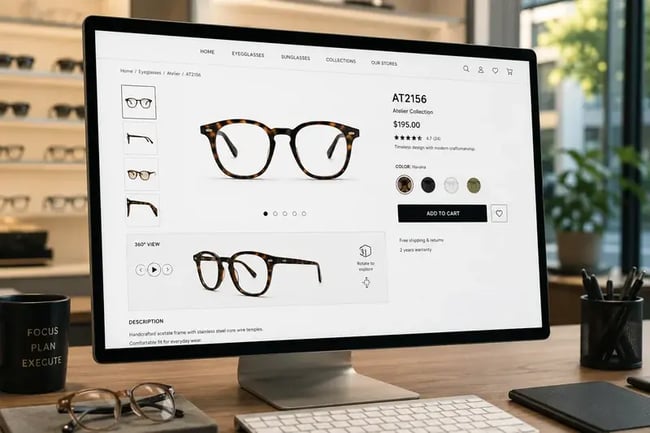
Eyewear is a visually demanding product category. A shopper does not only want to see the frame. They want to understand shape, size, material, color, lens finish, bridge design, temple details, and how the product may look on a face.
That creates pressure for e-commerce teams. Each SKU may require front images, side images, angled views, detail shots, packshots, lifestyle images, and sometimes visual assets for ads, marketplace feeds, social media, and email campaigns.
As the catalog grows, the image process often becomes harder to manage. Teams wait for physical samples, book photoshoots, retouch files, rename assets, upload images, check consistency, and request corrections. A single delay can postpone product launches or create inconsistent product pages.
This matters because eyewear e-commerce continues to grow. Euromonitor reported that retail e-commerce was one of the fastest-growing eyewear retail channels between 2020 and 2025, with 5.4% growth in 2025. For online teams, that means more pressure to publish complete and convincing product pages faster.
The challenge is clear: you need more eyewear product images, but you also need better control over speed, quality, and consistency.
The fastest way to improve eyewear images for e-commerce is not always to add more tools first. It is to remove friction from the workflow.
Start by defining a clear visual standard for every product page. This should include image angles, file formats, image dimensions, naming conventions, background rules, zoom quality, and required views for each frame type.
A simple production checklist can prevent unnecessary back and forth between e-commerce, marketing, product, and creative teams.
This process helps your team avoid repeated corrections. It also makes it easier to scale when your catalog grows or when you add new collections.
For decision makers, the business value is simple. A structured image workflow helps reduce time to market, protect brand consistency, and give online shoppers a more reliable product experience across the catalog.
Traditional photoshoots can create high-quality results, but they are difficult to scale for fast-moving eyewear catalogs. Physical samples must be available, logistics must be coordinated, and every new color or model can create new production work.
This is where digital frames can support a faster and more flexible e-commerce image process. Instead of relying only on physical photography, eyewear brands and retailers can use digital assets to create consistent product visuals across product pages and digital experiences.
High-quality 3D assets can help teams produce multiple views from a single digital model. They can also support interactive experiences, such as a 3D Viewer, where shoppers can rotate and inspect frames more closely.
This is especially useful for eyewear because small product details influence confidence. Hinges, temples, bridge shape, acetate thickness, lens color, and frame curvature can all affect how a shopper evaluates a product online.
Shopify has reported that merchants using 3D content see a 94% conversion lift on average. While results vary by brand, product type, traffic quality, and implementation, the business lesson is relevant for eyewear: richer product visualization can help shoppers evaluate products with more confidence.
For e-commerce teams, 3D assets are not only a visual upgrade. They can become a scalable content foundation for product pages, virtual try-on, marketplaces, and campaign assets.

Speed should not come at the expense of clarity. The goal is not only to publish eyewear images faster. The goal is to publish visuals that help shoppers decide.
Online eyewear shoppers often need answers to practical questions before buying. Is the frame narrow or wide? Are the temples thick or thin? Is the color glossy or matte? Does the lens tint look subtle or strong? Does the product feel premium, casual, bold, or lightweight?
Your image set should be designed around those questions.
| Visual asset | Shopper question answered | Business value |
|---|---|---|
| Front view | What is the frame shape? | Improves product comparison |
| Side view | What do the temples look like? | Reduces uncertainty about design |
| Angle view | How does the frame look in depth? | Creates a more realistic product impression |
| Detail view | What are the materials and finishes? | Supports premium positioning |
| Interactive view | Can I inspect the product more closely? | Increases confidence and engagement |
For retailers that sell prescription eyewear, sunglasses, and fashion frames, image completeness is a major part of the online user experience. Syndigo's 2024 product content research highlights how complete and accurate product content influences how consumers evaluate products online.
Better eyewear images can help reduce hesitation because shoppers do not need to guess what the product looks like. They can evaluate the frame faster and move closer to purchase.
Eyewear product pages work best when static images, 3D assets, and fit experiences support each other.
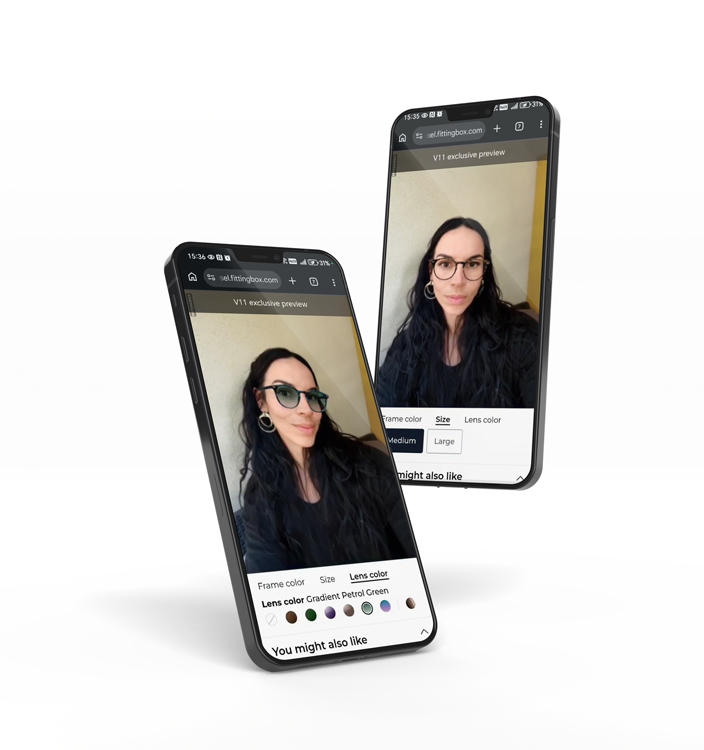
Static images help shoppers compare products quickly. 3D views help them inspect frame details. Virtual try-on helps them understand how a frame may look on their own face. Together, these experiences create a more complete online decision journey.
A glasses virtual try-on experience can help reduce purchase hesitation by turning product visualization into a more personal interaction. Instead of only seeing a frame on a white background, shoppers can try it on virtually and better assess style, shape, and overall fit perception.
For e-commerce managers, this has a direct business benefit. Shoppers who feel more confident are more likely to continue comparing products, add frames to cart, and complete their purchase journey.
For teams using 3D assets, the same visual foundation can support several use cases. One digital asset can contribute to product pages, interactive viewing, virtual try-on, and other digital touchpoints. This helps reduce duplicated production work and creates a more consistent experience across the website.
The result is a faster image process that does not only save time. It also improves the way customers interact with your eyewear catalog.
Many e-commerce teams try to speed up eyewear image creation by solving each bottleneck separately. They use one provider for product photos, another for retouching, another for 3D rendering, and another for interactive product experiences.
This can work at a small scale, but it becomes harder to manage as the catalog expands. Every handoff can create delays, inconsistencies, or additional quality checks.
A more scalable approach is to build a visual content ecosystem. That means your team should think beyond one image output and ask how each asset can serve several business needs.
For eyewear brands and retailers, 3D assets for eyewear can support this scalable approach by helping teams create consistent digital product experiences from a structured visual foundation.
This is especially valuable for fast-growing e-commerce teams that need to launch products quickly while protecting brand quality.
Speed is useful only if it improves business performance. That is why eyewear e-commerce teams should measure the impact of image workflow improvements with clear indicators.
Start with operational metrics. Track how long it takes to move from product sample or digital asset to published product page. Measure the number of correction rounds. Monitor how often product pages go live with missing images.
Then connect the workflow to e-commerce performance. Compare product pages with complete image sets against pages with limited visuals. Look at product page engagement, add-to-cart rate, conversion rate, and return reasons when available.
You can also track customer behavior around interactive visuals. If shoppers rotate a 3D model, use virtual try-on, or zoom into detail images, those interactions can reveal what helps them make decisions.
For leadership teams, this creates a clearer ROI story. Faster image production can reduce operational delays. Better visuals can improve the online buying experience. Stronger product confidence can support conversion and reduce uncertainty.
When visual production becomes measurable, it moves from a creative task to a growth lever for eyewear e-commerce.
Speeding up eyewear images for e-commerce is not only about producing files faster. It is about building a scalable visual workflow that supports product confidence, launch speed, and online sales performance.
With structured processes, digital frames, 3D assets, and interactive visualization, eyewear teams can publish faster while giving shoppers the clarity they need to buy with confidence.
They can speed up production by standardizing image requirements, using clear approval workflows, and relying on digital frame assets when physical photoshoots create delays.
No, if the workflow is structured. Clear visual standards and reusable digital assets can help teams publish faster while keeping product pages consistent and professional.
3D assets help shoppers inspect frame details more clearly. They can also support 3D viewing, virtual try-on, and more scalable product visualization workflows.
Better visuals can support conversion by reducing uncertainty. When shoppers can see shape, details, scale, and fit context more clearly, they can make decisions with more confidence.
Request a demo, a quote or set up an appointment with one of our sales representatives.
CONTACT US
© FITTINGBOX 2026 • Terms of use • Privacy & Legal