Yes, mono PD is generally more precise for online glasses because it measures each eye separately. This helps align each lens with the wearer’s real visual axis and can improve comfort, especially for progressive or higher-prescription lenses.

When buying prescription glasses online, pupillary distance plays a decisive role in lens alignment and visual comfort. Yet many shoppers and even some optical professionals still confuse mono and binocular PD. Understanding the difference between these two measurements is essential for accurate lens positioning, especially in digital eyewear journeys.
This article explains mono vs binocular PD, how each measurement works, and why the distinction matters when glasses are fitted online.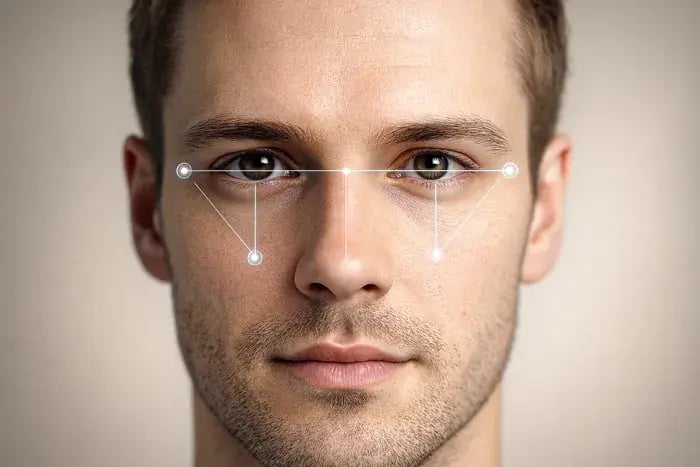
Pupillary distance refers to the distance between the centers of the pupils. This measurement is used to align the optical center of each lens with the wearer’s visual axis. When lenses are not properly aligned with the eyes, visual discomfort can occur, including eye strain, blurred vision, or distortion.
In the context of online glasses, pupillary distance becomes even more critical. Unlike in-store environments where an optician can make manual adjustments, online eyewear relies entirely on digital measurements to ensure lenses are correctly positioned from the start.
Even small inaccuracies in pupillary distance can have noticeable consequences. A deviation of just 2 millimeters can affect visual clarity, particularly for progressive lenses or higher prescriptions. This is why understanding how PD is measured, and which method offers better precision, is essential for online eyewear retailers and consumers alike.
Binocular PD is the total distance between the centers of both pupils. It is expressed as a single number, for example 64 millimeters, and has historically been the most common form of pupillary distance used in optical prescriptions.
This measurement is often taken during an eye exam using a ruler or a digital pupilometer. Because it provides a simple, single value, binocular PD has long been considered sufficient for basic lens alignment, particularly for single-vision lenses.
While binocular PD can work reasonably well in symmetrical faces, it assumes that both eyes are positioned at equal distances from the center of the nose. In reality, facial asymmetry is extremely common. Studies published in optical research journals show that more than 70 percent of people have noticeable asymmetry between their left and right eye positions.
This limitation becomes more evident in online eyewear, where lenses are manufactured and mounted without any in-person adjustment. Using a single binocular value may result in slight misalignment, especially for prescriptions that require higher optical precision.
Mono PD, also called monocular pupillary distance, measures the distance from the center of the nose bridge to each pupil individually. Instead of one number, it provides two values, one for the right eye and one for the left eye.
For example, a mono PD might be recorded as 32 millimeters for the right eye and 31 millimeters for the left eye. These individual measurements allow each lens to be aligned precisely with each eye’s visual axis.
Facial asymmetry is not an exception, it is the norm. Differences in eye position, nose shape, and facial structure mean that most people do not have perfectly centered pupils. Mono PD accounts for this natural variation.
In 2024, several optical studies confirmed that monocular measurements improve lens alignment accuracy by up to 25 percent compared to binocular PD alone, particularly for progressive and multifocal lenses.
The main difference between mono and binocular PD lies in precision. Binocular PD provides an average distance, while mono PD delivers eye-specific alignment. This distinction directly impacts optical performance, especially in digital fitting scenarios.
For online glasses, where frames and lenses are prepared without physical fitting, mono PD offers a more reliable foundation for accurate lens positioning.
Single-vision lenses are generally more forgiving when it comes to PD accuracy, which is why binocular PD has historically been acceptable. However, progressive lenses require extremely precise alignment between multiple optical zones.
In these cases, mono PD significantly reduces the risk of visual discomfort. According to industry data from 2023, eyewear returns related to vision issues were reduced by nearly 18 percent when monocular pupillary distance was used instead of binocular measurements.
| Criteria | Binocular PD | Mono PD |
|---|---|---|
| Measurement type | Single combined value | Two individual values |
| Accounts for facial asymmetry | No | Yes |
| Accuracy for progressive lenses | Moderate | High |
| Suitability for online glasses | Limited | Optimal |
Buying glasses online removes the possibility of manual adjustment by an optician. Everything depends on the quality of the data collected during the digital fitting process, including frame selection, lens type, and pupillary distance.
This is where mono PD becomes essential. It compensates for the lack of physical interaction by providing a more detailed and individualized measurement.
Modern eyewear platforms increasingly rely on online PD measurement tools to capture accurate monocular values. Solutions like an online PD measurement tool use facial analysis and real-time calibration to deliver reliable results without requiring manual input.
These tools are designed to integrate seamlessly into ecommerce journeys, improving confidence and reducing friction during checkout.
Consider a shopper purchasing progressive glasses online. With binocular PD, the lenses may be slightly misaligned, leading to adaptation issues. With mono PD captured digitally, each lens is positioned according to the wearer’s unique facial structure, improving comfort from the first wear.
This precision directly impacts satisfaction, return rates, and long-term trust in online eyewear brands.

Advancements in camera technology and computer vision have made it possible to measure pupillary distance using standard smartphones. In 2025, optical accuracy tests showed that calibrated smartphone-based measurements achieved accuracy levels within 1 millimeter of in-store devices.
This level of precision makes mono PD measurement accessible at scale, without compromising user experience.
When combined with solutions from the optical fit toolbox, mono PD data supports better lens alignment across different frame shapes and sizes. This is particularly relevant for brands offering a wide range of digital frames and lens configurations.
By integrating accurate pupillary distance measurement into the online journey, eyewear retailers can deliver a level of precision that closely matches in-store experiences.
Yes, mono PD is generally more precise for online glasses because it measures each eye separately. This helps align each lens with the wearer’s real visual axis and can improve comfort, especially for progressive or higher-prescription lenses.
PD accuracy matters because online eyewear purchases depend on digital fitting data. A reliable PD measurement can reduce lens misalignment, improve the first-wear experience, and help limit returns linked to visual discomfort.
Yes, when the tool captures accurate monocular values. Progressive lenses require precise positioning because they include several optical zones, so mono PD helps eyewear retailers deliver a more reliable fitting experience online.
Retailers can integrate mono PD measurement through a digital optical fit solution connected to their ecommerce journey. This allows shoppers to measure their PD before checkout and gives the retailer more accurate data for lens production.
Understanding mono vs binocular PD is essential for achieving proper lens alignment, especially in online eyewear environments. While binocular PD offers simplicity, mono PD provides the precision required for modern digital fitting. As online glasses continue to grow in popularity, monocular pupillary distance is becoming the standard for accurate, comfortable, and reliable lens positioning.
Request a demo, a quote or set up an appointment with one of our sales representatives.
CONTACT US
© FITTINGBOX 2026 • Terms of use • Privacy & Legal