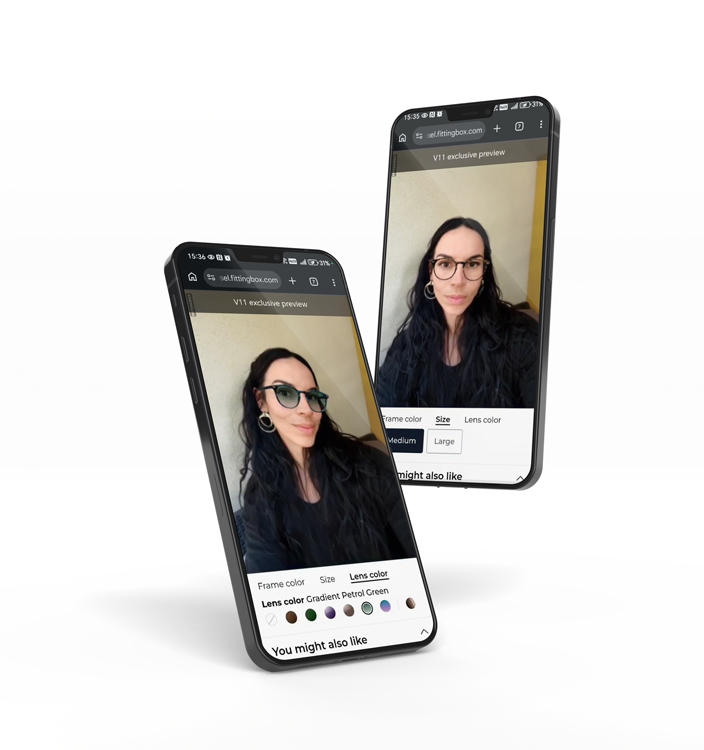
Virtual try-on helps shoppers see how frames look on their own face before checkout. This reduces uncertainty, improves confidence, and makes the final purchase feel more reassuring.

In eyewear retail, the ability to try on glasses virtually is no longer a gimmick. It is a practical way to reduce purchase uncertainty and improve the customer experience.
When shoppers can see themselves in a frame before checkout, they make decisions with more confidence. One of the most valuable VTO benefits is higher purchase satisfaction, and that satisfaction shows up in conversion, loyalty, and fewer returns.
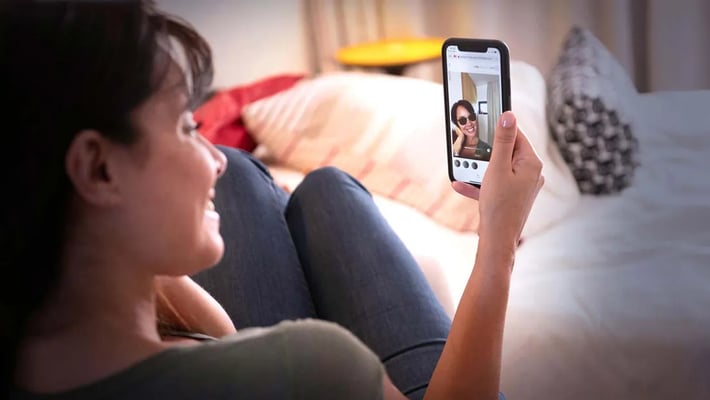
Eyewear shopping is personal. Frames change how people see themselves, and how they believe others will see them. In-store, shoppers validate that feeling instantly with a mirror. Online, that reassurance used to be missing, which created friction and delayed decisions.
Try-on virtually reduces that friction by giving shoppers visual confirmation at the exact moment they hesitate. It also triggers a known behavior pattern: when people can picture an item as “theirs,” attachment increases. In eyewear, this shows up as more time spent evaluating a specific frame, more comparisons across colors, and more commitment once the right option feels obvious.
Research consistently links interactive and vivid try-on experiences with stronger engagement and higher perceived usefulness. Those two signals matter because they reduce decision anxiety without extra persuasion. The shopper feels in control, and control is a direct driver of satisfaction.
Purchase satisfaction is often decided before delivery. If the shopper feels confident at checkout, the experience already starts on a positive note. Then the delivery moment either confirms that feeling or breaks it. Eyewear returns are frequently driven by expectation mismatch, not by product quality.
Virtual fitting helps align what the shopper expects with what they receive. When the on-screen experience reflects real proportions and visual details, customers are less likely to feel surprised by the shape, width, or overall look. That is one of the most practical VTO benefits for e-commerce operations because it supports both satisfaction and margin protection.
Returns are not a niche issue. The National Retail Federation’s 2025 report estimates that 19.3% of online sales are returned, which makes even small reductions meaningful at scale (NRF, 2025).
Not every try-on experience builds confidence. Satisfaction increases when VTO feels trustworthy and consistent. If tracking is unstable, scale feels off, or colors look unrealistic, the tool can create more doubt than reassurance. That is why accuracy and UX clarity matter more than novelty.
Start with simple trust signals. Make the try-on entry point obvious. Keep load time low. Ensure the frame sits correctly on the face and stays aligned with natural movement. These details tell the shopper the experience is reliable enough to use for a decision.
High-quality 3D assets are a major part of perceived realism. A true-to-scale 3D viewer for eyewear helps shoppers understand structure and details, while VTO provides the “on-me” context that reduces uncertainty.
For decision makers, the conversation is not “Do shoppers like it?” It is “Does it improve performance?” Satisfaction is valuable because it connects directly to conversion rate and to post-purchase outcomes. When shoppers feel sure, they abandon carts less often. When expectations are clear, they return less often.
External research supports the mechanism. A 2024 systematic review of virtual try-on systems highlights VTO’s role in improving consumer experience and purchase behavior across studies (MDPI, 2024). Market investment also reflects retailer focus on these outcomes. Grand View Research forecasts strong growth from 2024 to 2030, with adoption driven by retailers trying to blend the convenience of online shopping with a more personalized experience (Grand View Research, 2024).
To connect the experience to revenue, treat VTO as a conversion feature, not a content add-on. That means measuring impact and optimizing placement and product coverage.
| Metric | Why it matters | How to evaluate |
|---|---|---|
| Conversion rate | Confidence reduces hesitation | A/B test VTO exposure vs control |
| Return rate | Expectation match after delivery | Track return reasons and categories |
| Try-on activation | Adoption on key PDPs | Sessions with VTO used / PDP sessions |
| Cart abandonment | Friction at checkout | Compare VTO users vs non-users |
One more signal is customer sentiment. BrandXR’s 2025 AR research report cites that 98% of shoppers who used AR found it easier or more enjoyable (BrandXR, 2025). That type of experience lift is what creates a durable conversion advantage when competitors rely on static browsing.

Eyewear is not only about style. Shoppers also worry about how a frame will fit and whether their order details are correct. That is where supporting tools can amplify VTO benefits by removing additional uncertainty points.
A strong example is an online pupillary distance measurement tool. When shoppers can provide PD details with more confidence, it reduces avoidable back-and-forth and post-purchase issues. It also supports a smoother path to checkout for prescription shoppers who might otherwise delay the purchase.
When VTO is combined with decision support and optical reassurance, the overall journey feels complete. The shopper has fewer “I hope this works” moments, which is exactly what satisfaction depends on.
In eyewear, VTO benefits are easy to spot when you look at real shopper behavior. Users try more frames per visit, compare more confidently, and reach a decision with less friction. Retailers also report operational impact: fewer customer questions about “how it will look,” fewer avoidable exchanges, and stronger engagement on product pages.
The pattern is consistent across e-commerce and omnichannel. Online, VTO supports self-service decision making. In-store, it can extend assortment, reduce waiting time, and create a modern experience that feels aligned with how shoppers browse on mobile.
The key lesson from optical use cases is not that VTO replaces stores. It reduces uncertainty wherever the shopper is. That is why it supports satisfaction in both contexts. The closer your experience gets to “I can see it clearly on me,” the more likely the shopper is to buy, keep the product, and return for future purchases.

Virtual try-on increases purchase satisfaction when it reduces uncertainty before checkout and prevents expectation mismatch after delivery. That satisfaction is not abstract. It supports higher conversion, fewer returns, and stronger trust in the brand. For eyewear retailers, the best results come from realistic visuals, clean UX, and measurement that ties VTO adoption to revenue and operational impact.

Virtual try-on helps shoppers see how frames look on their own face before checkout. This reduces uncertainty, improves confidence, and makes the final purchase feel more reassuring.
Yes. When shoppers have a clearer expectation of frame shape, size, and style before buying, they are less likely to experience disappointment after delivery. This can help reduce avoidable returns linked to expectation mismatch.
A trustworthy experience depends on accurate face tracking, realistic frame rendering, fast loading, and clear UX. If the frame sits naturally on the face and visuals remain stable, shoppers are more likely to use VTO for a purchase decision.
Eyewear e-commerce stores, omnichannel retailers, optical chains, and premium frame brands can all benefit. VTO is especially valuable when customers need reassurance before buying online or comparing several styles.
Request a demo, a quote or set up an appointment with one of our sales representatives.
CONTACT US
© FITTINGBOX 2026 • Terms of use • Privacy & Legal