It depends on your product mix, price point, prescription flow, and return policy. Track your own baseline first, then reduce avoidable returns linked to fit, color, size, and product expectations.

Eyewear returns are often caused by uncertainty before checkout. Shoppers may like a frame online, then return it because the size, fit, color, or lens expectation feels different at home.
For a Shopify eyewear store, the goal is not to remove returns completely. It is to reduce avoidable returns by helping shoppers make better decisions before they buy.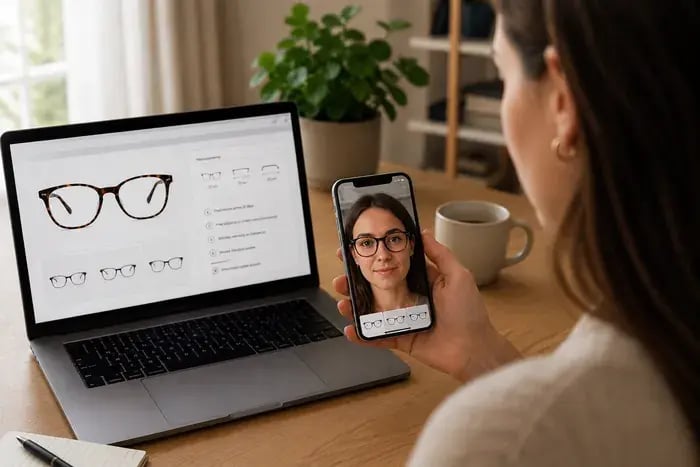
Eyewear is a high-consideration purchase because customers need to judge style, size, comfort, and prescription needs before they receive the product.
Common return reasons include frames that feel too wide, colors that look different in person, lenses that do not match expectations, or shoppers ordering several options to compare at home.
On Shopify, these returns are not only a logistics issue. They are a signal that the buying journey did not answer enough questions before checkout.
A strong product page reduces the gap between what shoppers imagine and what they receive. For eyewear, this means going beyond a clean product photo.
Include frame width, bridge width, temple length, lens height, material, weight, color notes, and recommended face shapes. Explain these details in simple language, not only in technical tables.
Use close-up images, side views, model photos, and short fit descriptions. The clearer the product page, the fewer surprises after delivery.
| Product page element | How it helps reduce returns |
|---|---|
| Frame measurements | Helps shoppers compare a new frame with glasses they already own. |
| Model photos | Shows how the frame sits on a real face, not only on a white background. |
| Color descriptions | Reduces returns caused by unclear tones, transparency, or finish. |
| Lens compatibility notes | Clarifies whether the frame suits progressive, thin, or high-prescription lenses. |
Many customers do not know what frame size means. A 50-20-145 measurement is useful only if the shopper understands how it affects comfort.
Create a simple size guide that explains narrow, medium, and wide frames. Add examples that compare measurements with existing glasses. This makes frame size easier to understand for non-technical buyers.
You can also guide shoppers by face shape, bridge fit, and preferred style. Fit education reduces uncertainty before the order is placed.
Fit content should feel like a helpful store associate. It can answer questions such as, “Will this frame suit a round face?” or “Is this better for a narrow bridge?”
For eyewear ecommerce, this guidance can be added through product filters, quiz results, comparison modules, or product badges. It should guide shoppers toward fewer, better options.
When shoppers understand why a frame fits their needs, they are less likely to order several models only to return most of them.
Eyewear has a visual confidence problem online. Shoppers want to know how a frame looks on their own face, not only on a model.
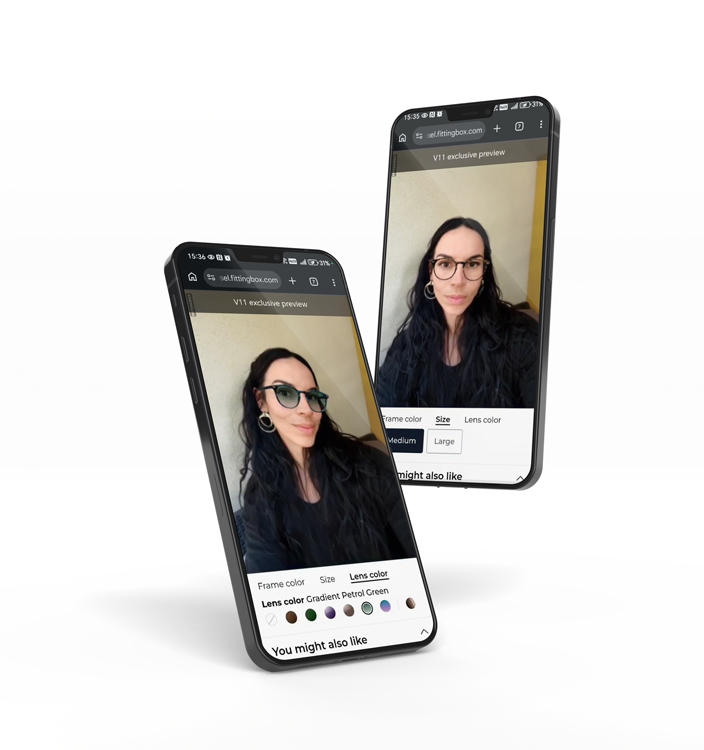
Accurate virtual try-on helps shoppers evaluate shape, size, and style before checkout. It can reduce hesitation because customers can compare frames in a more personal context.
For Shopify stores, virtual try-on works best when it is easy to launch on mobile, visible on product pages, and available for the frames shoppers actually want to buy.
Do not hide try-on behind a secondary button or a separate page. Add it close to product images, color selectors, and size information.
Use clear microcopy such as “Try this frame virtually” or “See how this shape looks on your face.” The action should feel natural, not like a separate tool.
A dedicated Shopify app for eyewear store can make virtual try-on easier to deploy without rebuilding the full ecommerce experience.

Return data is one of the most useful sources for improving an eyewear store. A high return rate can point to a product, content, sizing, or fulfillment issue.
Do not rely only on broad categories like “not suitable” or “changed my mind.” Ask for specific return reasons such as too large, too small, color mismatch, uncomfortable bridge, lens issue, or different from photo.
Return reasons should become product page improvements, not only customer service notes.
Review return reasons by product, collection, frame size, color, and traffic source. If one frame has many “too wide” returns, update its description and size guidance.
If a color generates returns, add better lighting, close-up images, or color notes. If customers often return after lens selection, review your lens explanation and prescription workflow.
This connects return reduction to merchandising, UX, and eyewear e-commerce performance.
A return does not always mean the customer is lost. Many eyewear shoppers still want glasses, but need a better frame, color, or lens option.
Create an exchange-first flow that suggests alternatives based on the return reason. If the frame is too wide, recommend a narrower model. If the color is too bold, suggest a similar shape in a softer tone.
Exchanges protect revenue while still respecting customer choice.
Send clear delivery, fitting, adjustment, and care information after purchase. Some returns happen because customers do not know whether a small discomfort can be adjusted by an optician.
For prescription eyewear, explain what to expect when wearing new lenses. Add support options for lens questions, frame fit, or prescription verification.
Post-purchase content helps customers solve small issues before they become refund requests.
Reducing eyewear returns requires better confidence before checkout. Fittingbox supports this through virtual try-on, 3D product visualization, and pupillary distance measurement.
These tools help shoppers assess frame style, product details, and optical information online. For eyewear Shopify stores, they can support a more informed buying journey without turning the experience into a complex technical process.

To reduce returns on an eyewear Shopify store, start with the reasons customers return products. Then improve product content, fit guidance, virtual try-on, data tracking, and exchange flows.
The most effective strategy is not stricter policies. It is better pre-purchase confidence, supported by clearer information and more realistic product evaluation.
It depends on your product mix, price point, prescription flow, and return policy. Track your own baseline first, then reduce avoidable returns linked to fit, color, size, and product expectations.
Virtual try-on can help reduce returns when it improves shopper confidence before checkout. It is most useful when paired with accurate product data, clear sizing, and strong product page content.
Charging for returns may reduce some costs, but it can also create purchase hesitation. First improve fit guidance, product content, and exchange options before making the policy more restrictive.
Start with return reasons by frame, size, color, collection, and traffic source. This shows whether returns are linked to product content, merchandising, sizing, or customer expectations.
Request a demo, a quote or set up an appointment with one of our sales representatives.
CONTACT US
© FITTINGBOX 2026 • Terms of use • Privacy & Legal